Search
Despite increasing urbanisation, little is known about skin health for urban-living Aboriginal children and young people (CYP, aged <18 years). This study aimed to investigate the primary care burden and clinical characteristics of skin conditions in this cohort.
Staphylococcus aureus bacteraemia (SAB) is the most common cause of sepsis, contributing to paediatric intensive care unit admission in Australia and New Zealand. While deep venous thrombosis (DVT) has been reported in children with invasive S. aureus infections, the actual frequency and possible effects of thrombosis on disease severity and outcome in paediatric SAB remain unknown. Moreover, guidance regarding imaging for paediatric SAB management are poorly defined.
There is a scarcity of prospective studies investigating the relative roles of skin prick and intradermal testing, serum specific IgE, and extended oral challenges in diagnosing children with reported β-lactam allergies.
The prevalence of impetigo and pharyngitis - which are both superficial group A streptococcus (GAS) infections that precede acute rheumatic fever - is poorly defined. Guidelines recommend the early diagnosis of both infections to prevent ARF; however, screening to enable the concurrent detection of these infections in high-risk populations has rarely been performed.
Our skin, the body’s largest organ, protects us and maintains overall health. Untreated recurring skin infections like impetigo and scabies severely impact children. The Kids is at the forefront of combatting skin infections, particularly within remote Aboriginal communities experiencing some of the world’s highest rates.
The abundant skin commensal, Staphylococcus epidermidis, is the leading cause of late-onset sepsis (LOS) in preterm infants but rarely causes infections in term infants and adults. Staphylococcal virulence mechanisms and the role of the preterm immune responses in driving these life-threatening infections remain poorly understood.
Inadequate housing and living conditions underpin significant health and wellbeing inequality in Australia, particularly for Indigenous people. This review aimed to define infectious disease (ID) outcomes used to measure the health impact of inadequate housing in Australia within a research context.
Asha Jacinta Bernadette Bowen Walton Ricciardo BA MBBS DCH FRACP PhD GAICD FAHMS OAM MBBS (hon) DCH FACD Head, Healthy Skin and ARF Prevention
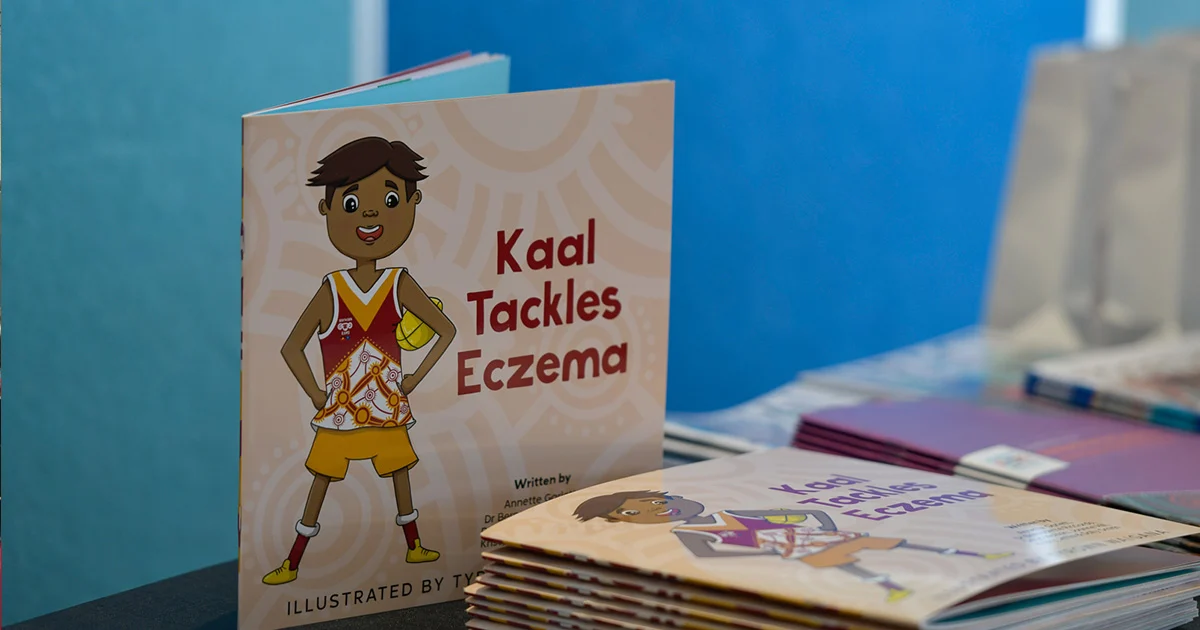
In close partnership with Aboriginal Elders and community members in Western Australia's south-west, we created ‘Kaal Tackles Eczema’, a children’s book to help Aboriginal families manage eczema. Our research showed a high prevalence and need for culturally relevant resources. The book uses Noongar language and art to educate and reduce infections, and is available online and in schools.
For millennia, Aboriginal people's ways of knowing, doing and being were shared through art, song, and dance. Colonisation silenced these ways, affecting loss of self-determination for Aboriginal people. Over the past decade in Australia, hip-hop projects have become culturally appropriate approaches for health promotion.