
Search
SETBP1 Haploinsufficiency Disorder (SETBD) is characterised by mild to moderate intellectual disability, speech and language impairment, mild motor developmental delay, behavioural issues, hypotonia, mild facial dysmorphisms, and vision impairment. Despite a clear link between SETBP1 mutations and neurodevelopmental disorders the precise role of SETBP1 in neural development remains elusive.
This study aimed to investigate acamprosate and naltrexone dispensing patterns in Australia.
André Schultz MBChB, PhD, FRACP Head, BREATH Team Head, BREATH Team Prof André Schultz is the Head, BREATH Team at The Kids Research Institute

Culturally secure intervention to facilitate medical follow up for Aboriginal children, after being hospitalised with chest infections, have proven to improve long-term lung health outcomes.

A public health campaign to raise awareness about the dangers of chronic wet cough in Aboriginal children is helping to improve detection, diagnosis and management of the condition.

COMBAT CF is one of two long-standing international trials which have resulted in new early intervention options helping to reduce progressive lung damage in kids living with CF.
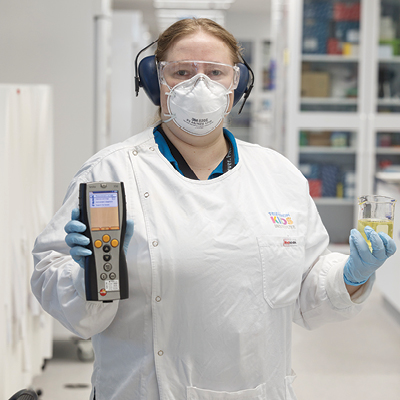
In a world being urged to embrace renewable options, biodiesel fuels are increasingly being touted as a greener, cleaner choice than traditional diesel.
Consumption of nitrate in drinking water has previously been associated with a range of adverse health effects, including methemoglobinemia and potentially cancer. In animal models, it has been shown to impact respiratory structure and function, however, there is a paucity of data of the effects of in utero exposure on the respiratory health of offspring.
Promptly recognising changes in an acutely unwell child’s condition is fundamental to prevent tragic outcomes. Western Australian (WA) healthcare facilities used inconsistent and varied paediatric early warning systems. To improve care consistency, a standardised ESCALATION system, inclusive of family involvement and sepsis recognition, was developed.
Rachel Foong BSc (hons), PhD, MBiostat Honorary Research Associate 08 6319 1626 Rachel.Foong@thekids.org.au Senior Research Fellow Dr Foong is an