
Search
Assisted reproductive technologies (ART) cover a range of methods used to help couples with fertility problems achieve pregnancy, including in-vitro fertilisation (IVF).
Language is one of the most remarkable developmental accomplishments of early childhood. Language connects us with others and is an essential tool for literacy, education, employment and lifelong learning.
Cancers in children are very different from cancers in adults - in most cases they appear to strike simply at random. They also develop differently and can spread more rapidly and aggressively. And because cancers in children are not obviously linked to their lifestyles, much work is needed to pinpoint their cause.
In a sunny country such as Australia, it’s important to identify how to achieve the right amount of sun exposure for good health. We need to be able to harness the benefits of vitamin D and sunlight while remaining protected from the proven dangers of too much UV radiation.
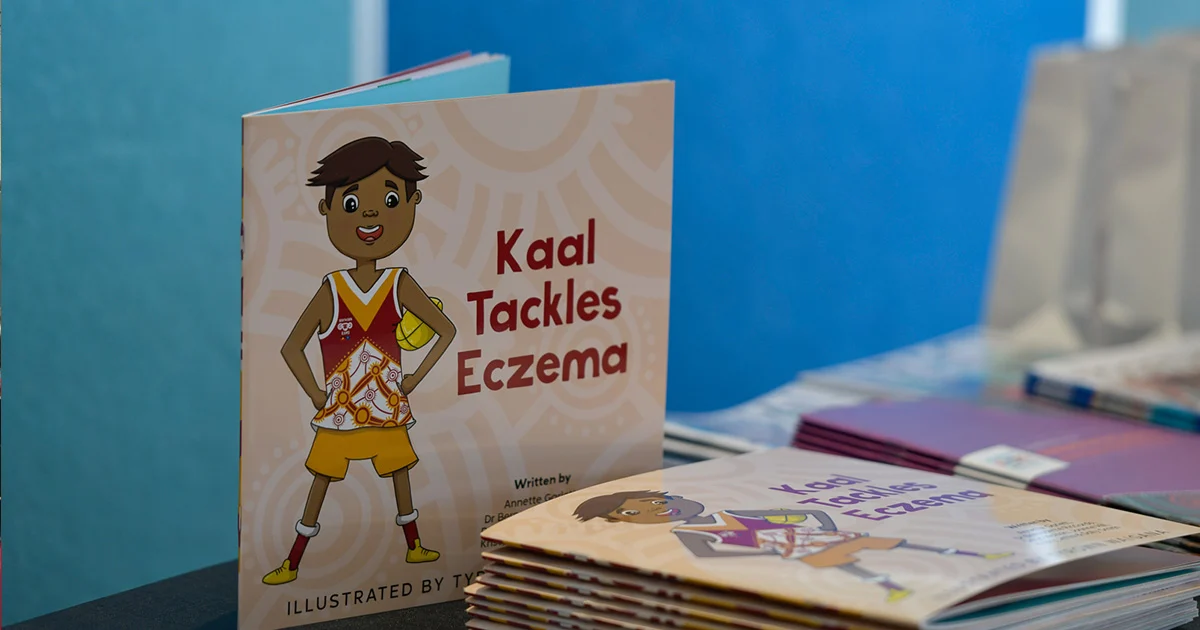
In close partnership with Aboriginal Elders and community members in Western Australia's south-west, we created ‘Kaal Tackles Eczema’, a children’s book to help Aboriginal families manage eczema. Our research showed a high prevalence and need for culturally relevant resources. The book uses Noongar language and art to educate and reduce infections, and is available online and in schools.
Developmental Coordination Disorder is a lifelong disability impacting most aspects of daily living that involve movement. With an estimated prevalence of ~5% of children, the disorder affects an average of one to two children in every Australian classroom.
Convenient, readily available and helping create a close and loving bond between baby and mother, breastfeeding is highly regarded for optimising infant health and preventing chronic disease in adulthood.

Here’s what we know so far about the impact of COVID-19 on children.
It's normal for children and teenagers to experience a range of emotions, including sadness, however childhood depression is more than just feeling sad.
Cyberbullying is a form of online harassment, where the bullying is carried out through the use of modern technology.