
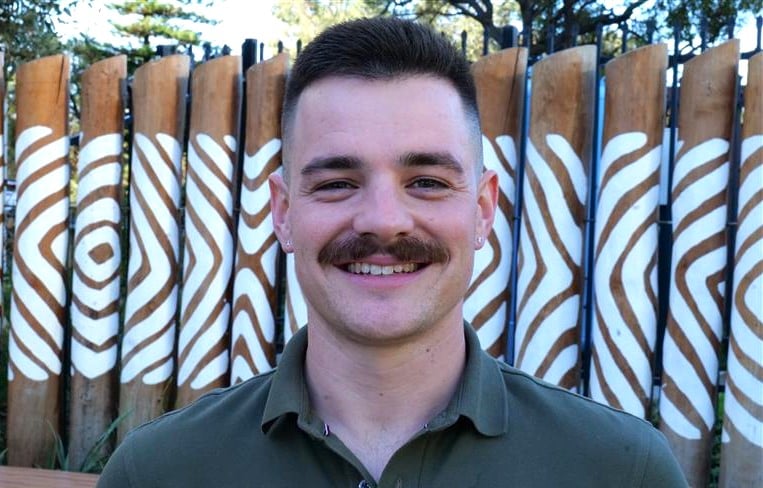
Jack Farrugia
Postdoctoral Researcher
BPsych(Hons), PhD
jack.farrugia@thekids.org.au
Dr Jack Farrugia (he/him) is a researcher with a Bachelor of Psychology (Honours) and a Doctor of Philosophy in Psychology from Curtin University.
Dr Farrugia is currently leading a program of research aimed at improving the mental health of young people who live in regional Australia. His work specifically focuses on regional young people from priority groups who face greater mental health risks and inequitable access to mental health services, including those who are LGBTQIA+, Aboriginal or Torres Strait Islander, culturally and linguistically diverse, and living with disability.
Dr Farrugia is passionate about engaging communities at every stage of the research process and conducting work that promotes equity and inclusion. His recent work includes the Optimise+ project, which aimed to enhance mental health and alcohol and other drug service delivery among LGBTQ+ community-controlled organisations.
Prior work includes leading the completed Safer Options research project, which aimed to enhance primary care responses for LGBTIQA+ Western Australians experiencing intimate partner violence. This project led to the creation of educational LGBTIQA+ intimate partner violence resources available at www.saferoptions.org.au. Dr Farrugia's PhD research explored Australian identity, examining the impacts of racism, discrimination, and systemic inequities.
Education and Qualifications
- Doctor of Philosophy (Psychology) – Curtin University
- Bachelor of Psychology (Honours) – Curtin University
Projects
Optimise+
Optimise+ is a research project designed to build on the best parts of LGBTQ+ community-controlled mental health and AOD services across Australia, with the aim of further enhancing service options.
Published research
Culturally competent care for LGBTIQA+ people experiencing intimate partner violence: A reflexive thematic analysis of healthcare provider perspectives and support needs
Lesbian, Gay, Bisexual, Transgender, Intersex, Queer, Asexual/Aromantic (LGBTIQA+) people and other individuals with diverse sexual orientation, sex and/or gender identity experience intimate partner violence (IPV) at higher rates than non-LGBTIQA+ people but often receive inconsistent culturally competent healthcare, which deters help-seeking.
Nature-Based and Community-Level Responses to Climate Distress in Young People: A Systematic Review
Climate change is both an environmental crisis and a growing source of psychological distress for young people, calling for responses that nurture emotional resilience and collective engagement. The emerging response to climate distress has mainly focused on formal psychological and individual-level interventions.